semi-trailers
An introduction to the basic production steps of semi-trailers(Raw material selection and parts processing)
November 21, 2024
An introduction to the basic production steps of semi-trailers(Design Stage)
November 21, 2024
semi-trailers
An introduction to the basic production steps of semi-trailers(Raw material selection and parts processing)
November 21, 2024
An introduction to the basic production steps of semi-trailers(Design Stage)
November 21, 2024

An introduction to the basic production steps of semi-trailers(Assembly and quality inspection)

Vehicle Assembly

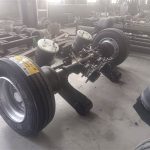
  • Chassis Assembly: Place the fabricated frame on the assembly line and install the axle, suspension system, braking system, tires, and other chassis components one by one, and conduct precise positioning and fastening to ensure that the connections between the various components are firm and reliable, and the overall performance of the chassis meets the design requirements.
  • Carriage Installation: Hoist the fabricated carriage onto the chassis and fix it by bolts or welding, and conduct sealing treatment on the connection parts between the carriage and the chassis to prevent rainwater, dust, etc. from entering the carriage interior.
  • Attachment Installation: Install various attachments of the semi-trailer, such as the towing pin, guardrail, lamps, reflective markings, toolbox, etc., and conduct corresponding debugging and detection to ensure that the functions of the attachments are normal and meet the requirements of relevant laws and regulations and safety standards.

Quality Inspection and Debugging

  • Static Inspection: After the completion of vehicle assembly, first conduct a static inspection, including the appearance inspection of the vehicle, dimension measurement, and inspection of the assembly quality of components, to ensure that the vehicle’s appearance is clean and flawless, the dimensions meet the design requirements, and the various components are assembled firmly and without looseness.
  • Dynamic Debugging: After passing the static inspection, conduct a dynamic debugging, including the driving performance test, braking performance test, suspension system debugging, electrical system detection, etc. Through driving tests under different working conditions on the test site or on the road, comprehensively detect and debug the acceleration performance, driving stability, steering flexibility, braking effect, etc. of the vehicle to ensure that the performance indicators of the vehicle reach the design requirements and comply with relevant national and industry standards.
  • Rain Test and Sealing Detection: For box-type semi-trailers and other vehicles with sealing requirements, a rain test is also required. By simulating different intensities of rainfall environments, check the sealing of the carriage to ensure that there is no leakage phenomenon inside the carriage and protect the goods from being eroded by rainwater.